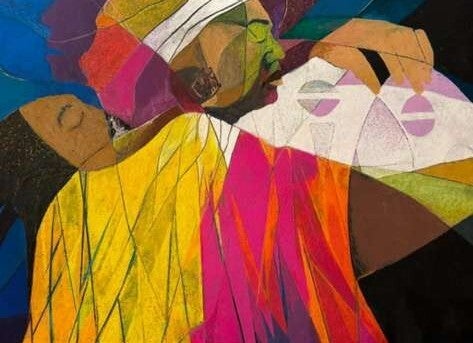
Dualism & Cultural Identity
The Aesthetics of Dualism: Two Images, One Canvas
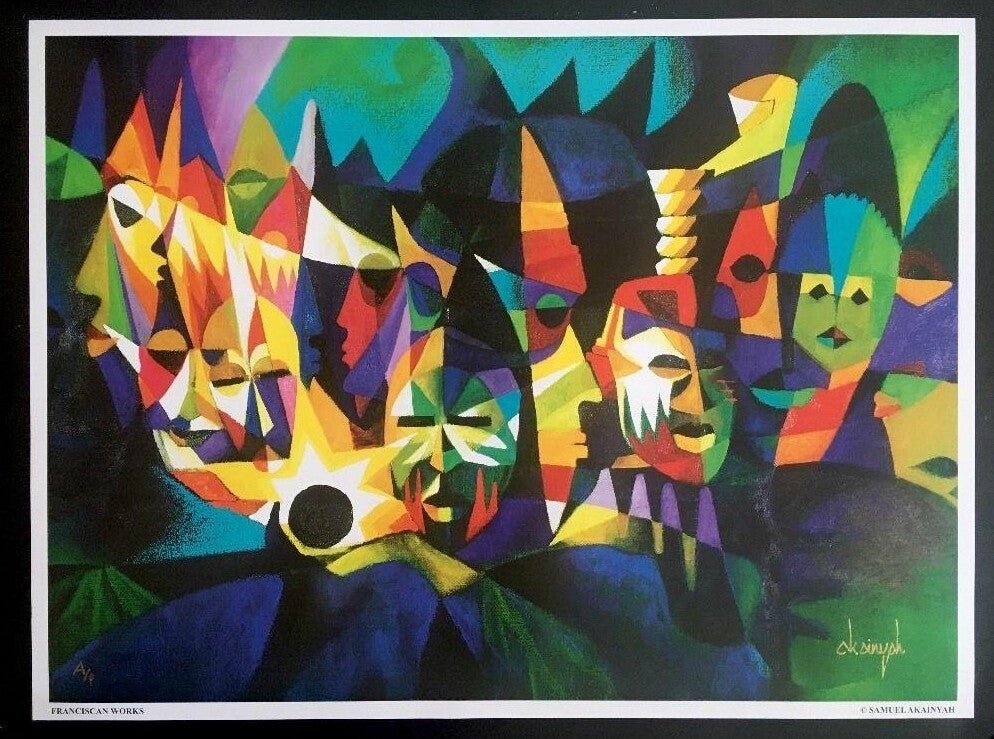
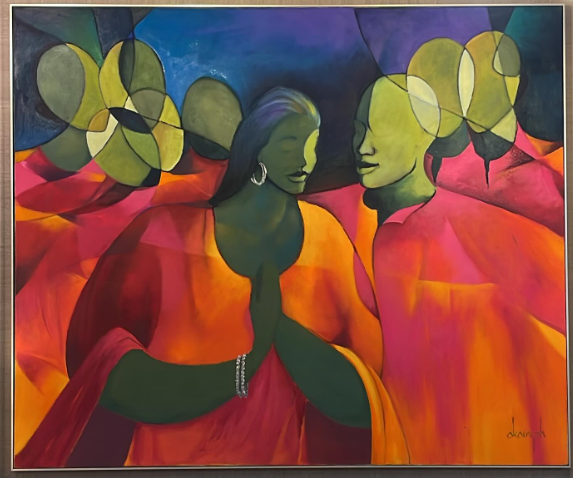
At the core of Professor Samuel Akainyah’s artistic philosophy is "Dualism," an epic art movement He pioneered to capture the complexities of the human experience. In his compositions, Dualism is a formal technique where two distinct images or realities are engineered to coexist within a single painting. Rather than forcing a full integration or a smooth transition, Akainyah leaves the visual tension unresolved, mirroring the internal divisions of identity.
- The Split Image: Visually, this manifests as figures, faces, or symbols that shift depending on the viewer’s perspective. A single stroke of his heavy, impasto oil technique can simultaneously define the contour of a modern figure and the silhouette of a traditional motif.
- Simultaneous Readings: The viewer is forced to hold two competing narratives at once—such as the visible versus the hidden, or the past versus the present.
- The Impasto Metaphor: The physical thickness of his paint acts as a bridge between these two worlds. The heavily layered textures create literal and metaphorical depth, reflecting the heavy burden and beauty of carrying multiple histories.
Navigating Cultural Identity and the Ghanaian-American Experience
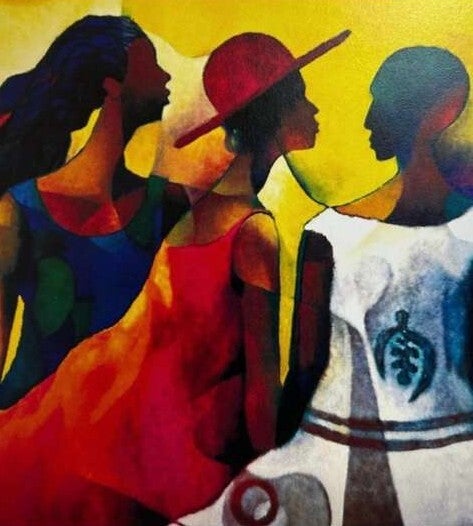
As a first-generation Ghanaian living, studying, and teaching in Chicago, Akainyah’s work is a profound exploration of hybrid identity. His art serves as a visual navigation system for the postcolonial African diaspora, balanced between traditional roots and Western modernism.
- The Mask as a Dual Mirror: In his celebrated Heritage & Mask Series, Akainyah frequently employs African tribal masks—such as those mirroring the distinct cultures of West Africa—not as static relics, but as living symbols of dualistic identity. The mask represents the public face negotiated in a Western landscape versus the sacred, internal memory of ancestral roots.
- Bridging Local and Global Realities: Akainyah uses his deep knowledge of African history to comment directly on modern Western social dynamics. A prime example of this cultural juxtaposition is highlighted in his involvement with the documentary project Initiations, which juxtaposed his paintings of traditional Ghanaian male initiation rites against the rising gang subculture in urban America. By placing these two worlds in conversation, his art explores the universal human need for belonging, mentorship, and ritual, while exposing the tragic fractures that occur when cultural frameworks are lost.
- From Whence We Came: His monumental 11' x 11' masterpiece, From Whence We Came—presented directly to the President of Ghana—stands as the ultimate synthesis of this journey. The painting bridges the geographical and temporal divide, tracing the evolutionary line of cultural memory from the shores of West Africa to the realities of the contemporary diaspora.
Through Dualism, Professor Akainyah provides a visual vocabulary for anyone who has ever had to navigate multiple cultures, proving that identity is not a static label, but an ongoing, beautifully complex negotiation.